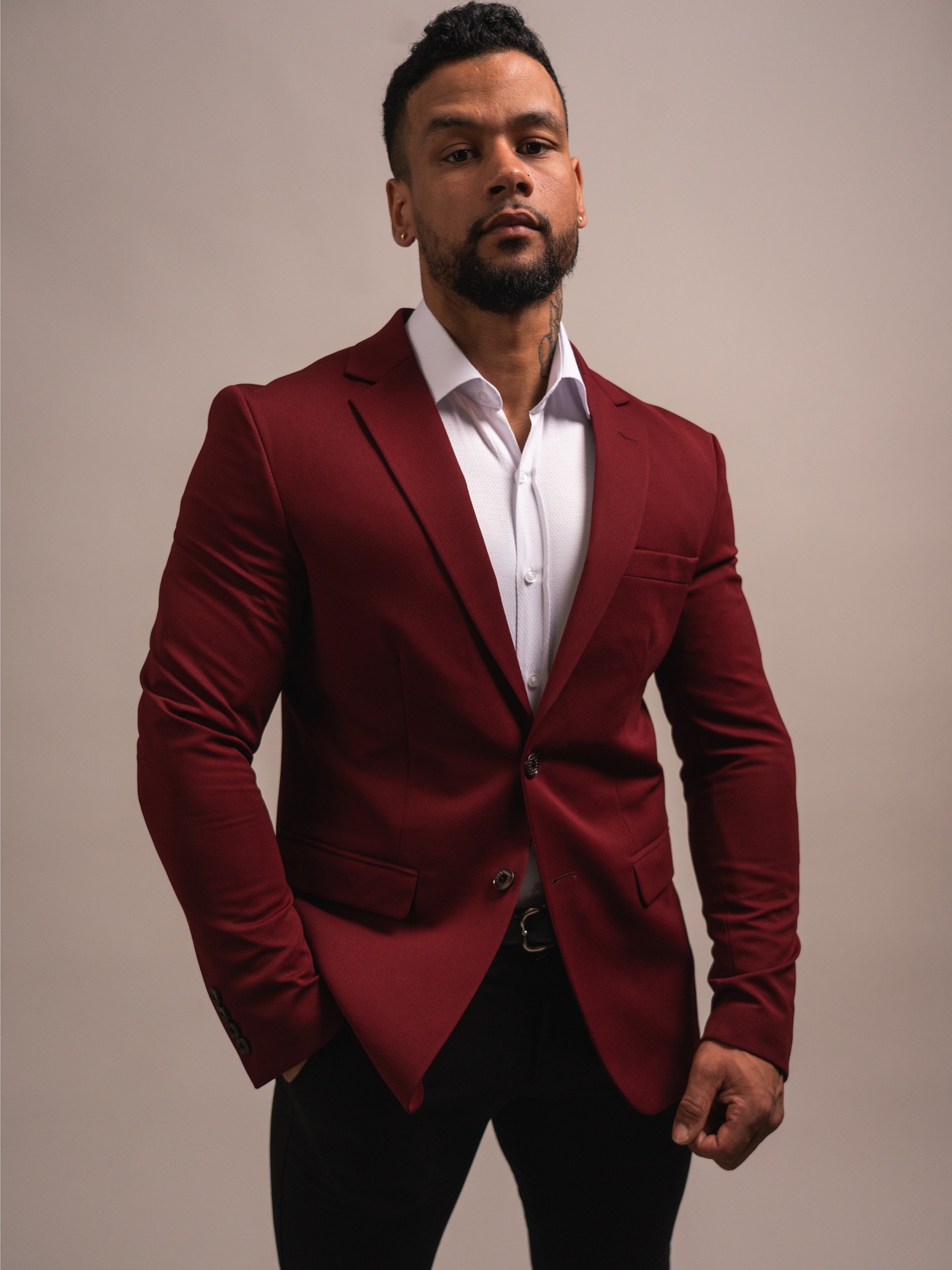
Noblezz addresses men who want to take the lead: a direction, a team, a business.
To impose oneself with nobility is to enter with a bearing that is noticed and that remains mistress of itself.
The boldness is in a line very close to the body. The eye on this line is French. The ability to weave it and to sew it is Turkish. The garment makes the link.
The bearing
A masculine elegance close to the body is judged by its balance.
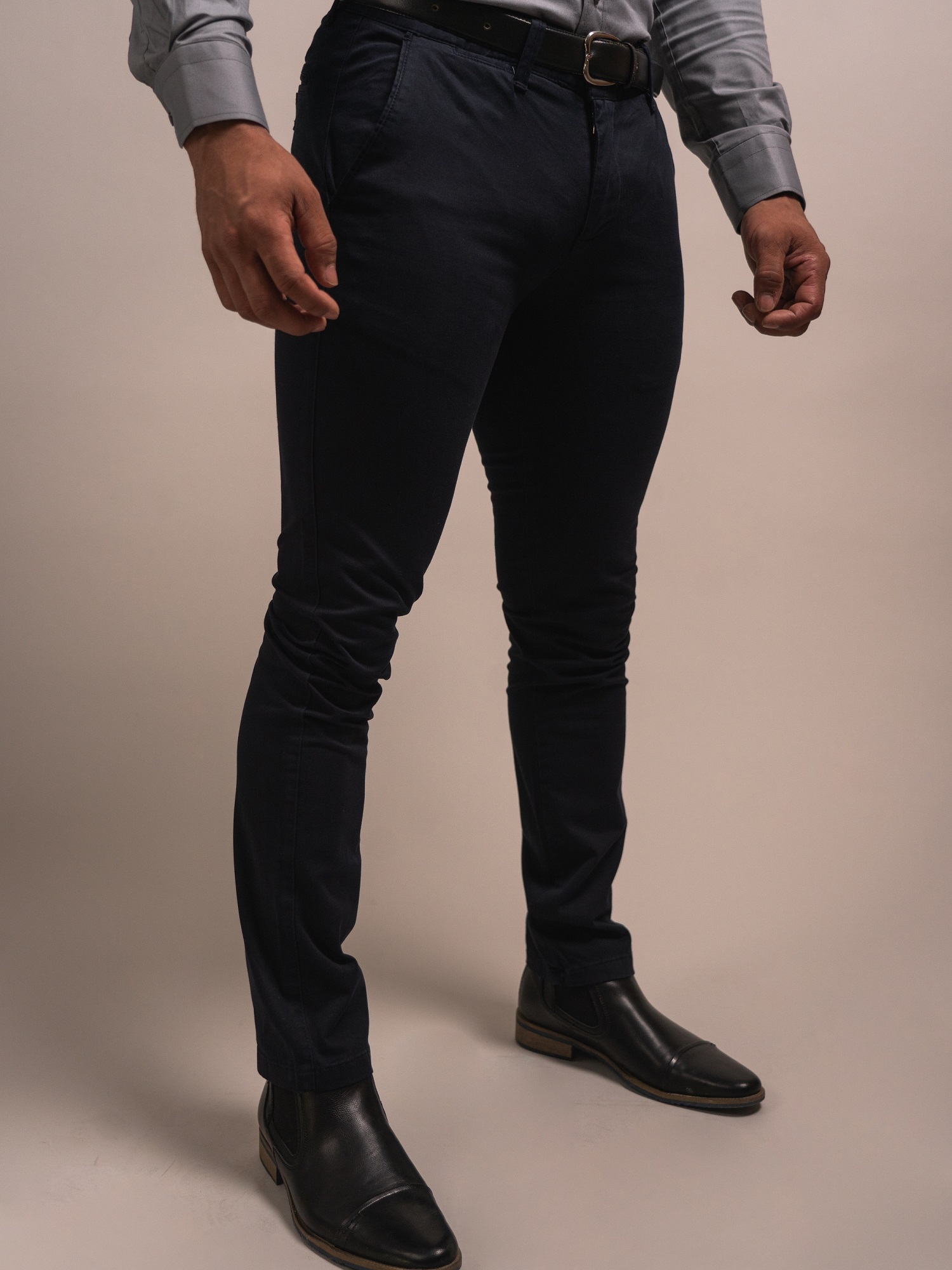
The shoulder stays within its natural width: if it widens, the chest collapses. The emmanchure rises, the sleeve leaves without a roll under the arm, the collar lies against the neck, the lapel notch stays short. The waist is taken in, the hip is followed, the leg is narrow from top to bottom.
On this line, the cloth has almost no aisance in which to hide. A fall that is too soft makes folds in the hollow of the stomach; a hand that is too stiff pulls at the seams as soon as the arm moves forward. This reading of proportions — clean, dressed, close to the body — is that of French masculine elegance. It is this that gives the boldness its hold.
The workshop
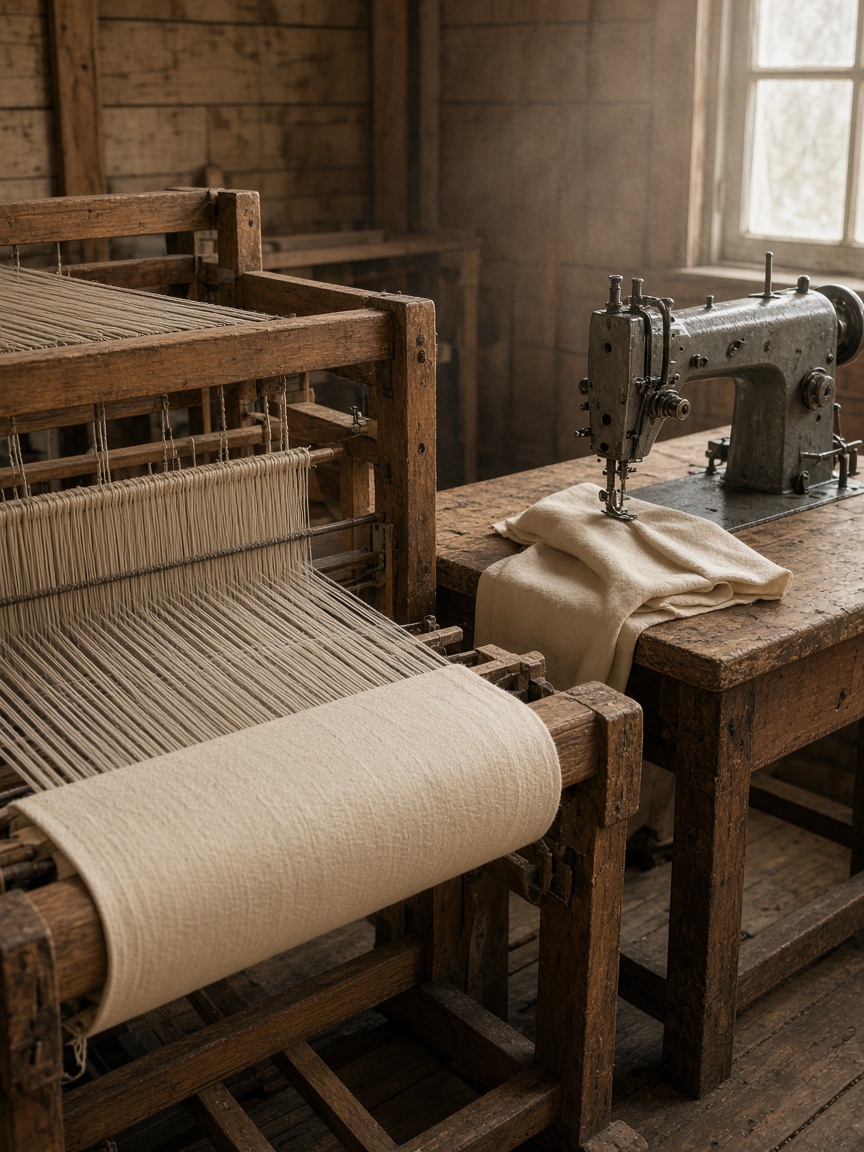
It is in order to hold this line that development begins at the loom, in Turkey. The warp is stretched, the weft passes, the weave is chosen according to what the body will ask.
A tight plain weave, in combed cotton, gives a dry surface that stays flat against the chest. A sergé, in plied yarn, takes the crease and keeps it along a sleeve close to the arm or a narrow leg. The yarn count, the plying, the weight, then the mercerisage and the sanforisage on the cotton are set before the cut: lustre, shrinkage, hold. When the leg is very close, a small share of elastane in the weft helps the knee come back; on the top, a stable weave, without elasticity, keeps the collar and the lapel clean.
At assembly, the entoilage covers only the zones that must stay straight — collar, chest, waistband — and lets the rest follow the movement. The lockstitch is set to the tension: on an extra slim piece, a thread pulled too tight puckers at once, a thread too loose opens at the first movement. The topstitching runs along the edge and closes the outline. Weaving the cloth, then sewing it: the experience of Turkish textile keeps, when worn, a bearing bold enough to impose itself, exact enough to last in the room where one decides.
The cut
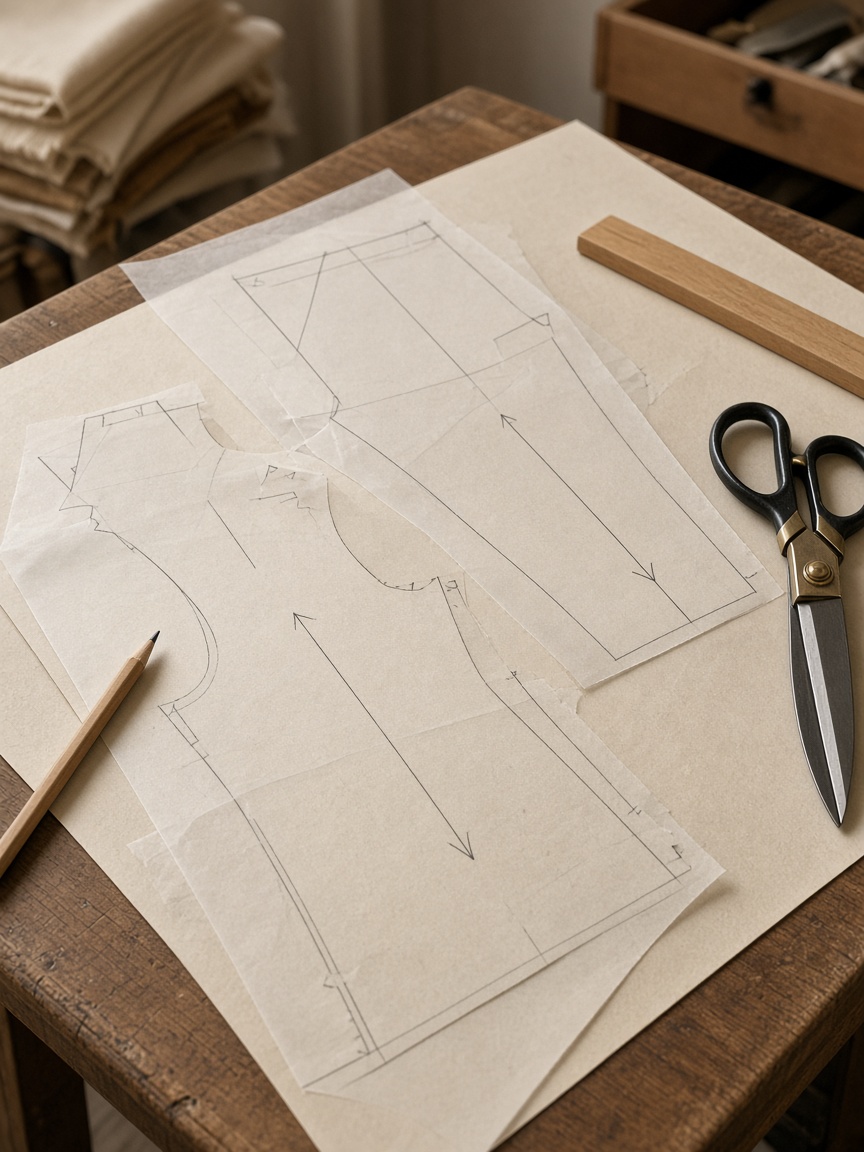
The extra slim is written in the pattern, zone by zone.
The aisance at the chest is short, the back width too. Under the ribcage, a deeper dart, or a side cut, takes in the waist. The emmanchure rises and tightens in the back: the arm lifts, without a pocket of air under the armpit. The sleeve cap keeps little reserve, the gathering disappears, the seam around the arm stays flat. The lapel lies against the chest, the buttoning falls near the sternum. Lower down, the fourche is short, the thigh follows the muscle, the knee has just enough to bend, the leg opening stays narrow and straight down to the shoe. The pattern carries the proportion. The woven cloth and the stitch sewn in the workshop keep it when worn. Up close, the silhouette does not float: this is how one presents oneself when aiming for the place of the one who decides.